If you own a pool, you know how much enjoyment and relaxation it brings to your home or business. But when your pool pump motor starts acting up, that oasis can quickly turn into a source of stress and unexpected expenses. For residents and small business owners in the area, understanding the warning signs of a failing pool pump motor is crucial to avoid bigger repair bills and downtime. In this guide, we’ll walk you through the most common symptoms of pump motor trouble, what they mean, and how to respond. Whether you’re a hands-on property manager or a first-time pool owner, recognizing these early indicators can save you time, money, and headaches. Plus, we’ll share insights on when to call in a professional for pool pump repair Rancho Margarita CA locals trust, and how to keep your system running smoothly all season long. Let’s dive into the practical signs and solutions every pool owner should know.
Unusual Noises: What Your Pool Pump Is Trying to Tell You
One of the earliest and most obvious signs that your pool pump motor may be failing is a change in the sounds it makes. While every pump produces some level of noise, a healthy motor typically hums or whirs at a consistent, low volume. When you start to hear grinding, screeching, or rattling noises, it’s time to pay attention. These sounds often indicate mechanical wear, such as worn bearings, loose parts, or debris caught in the impeller. Left unchecked, these issues can quickly escalate, causing further damage to the motor or even leading to complete failure.
Sometimes, a high-pitched squeal points to bad bearings, while a loud clanking could mean something is obstructing the impeller. If you notice a sudden increase in noise, turn off the pump and inspect for visible obstructions. However, internal motor issues are best handled by professionals. Ignoring these noises can result in more costly repairs down the line, or even the need for a full motor replacement.
For pool owners in this community, catching these warning sounds early can mean the difference between a quick fix and a major overhaul. If you’re unsure about the source of the noise, consider reaching out to Saddleback Mountain for a thorough inspection and expert advice.
Frequent Tripping of Circuit Breakers: Electrical Red Flags
Another sign that your pool pump motor is in trouble is frequent tripping of the circuit breaker. While an occasional trip can happen due to power surges or storms, repeated electrical interruptions are a red flag. This can indicate that the motor is drawing too much current, possibly due to internal short circuits, overheating, or moisture ingress. Electrical issues are not only inconvenient but can also pose a safety risk if left unresolved.
If your pump motor is causing the breaker to trip every time it starts, it’s best to stop using the equipment until a professional can assess the situation. Continuing to reset the breaker without addressing the underlying problem can lead to further damage, not just to the pump, but potentially to your entire electrical system.
For a deeper dive into the causes and solutions for persistent prime loss and electrical issues, check out Why Your Rancho Santa Margarita Pool Pump Keeps Losing Prime: Common Causes and Fixes. Understanding the interplay between electrical and mechanical problems can help you act quickly and avoid larger complications.
Decreased Water Flow and Circulation Issues
A healthy pool pump keeps water circulating efficiently, ensuring proper filtration and chemical distribution. When you notice weak jets, sluggish water movement, or poor skimmer performance, your pump motor could be losing power. Decreased water flow is often a symptom of internal wear, clogged impellers, or failing capacitors. In some cases, the problem may be as simple as a blocked basket or dirty filter, but if cleaning these components doesn’t restore normal flow, the motor itself may be struggling.
Over time, a failing motor may run hotter and less efficiently, further reducing its ability to move water. This can lead to cloudy water, algae growth, and increased chemical use as the pool’s circulation system falls behind. For local property managers, keeping an eye on water clarity and movement is a practical way to catch pump motor issues early.
If you’re considering an upgrade to address persistent flow problems or want to explore energy-efficient solutions, take a look at Smart Pool Equipment Upgrades for Rancho Santa Margarita Homes: Automation, Efficiency, and Control. Modern pumps and automation systems can offer improved performance and reliability for your pool.
Visible Leaks and Corrosion Around the Pump
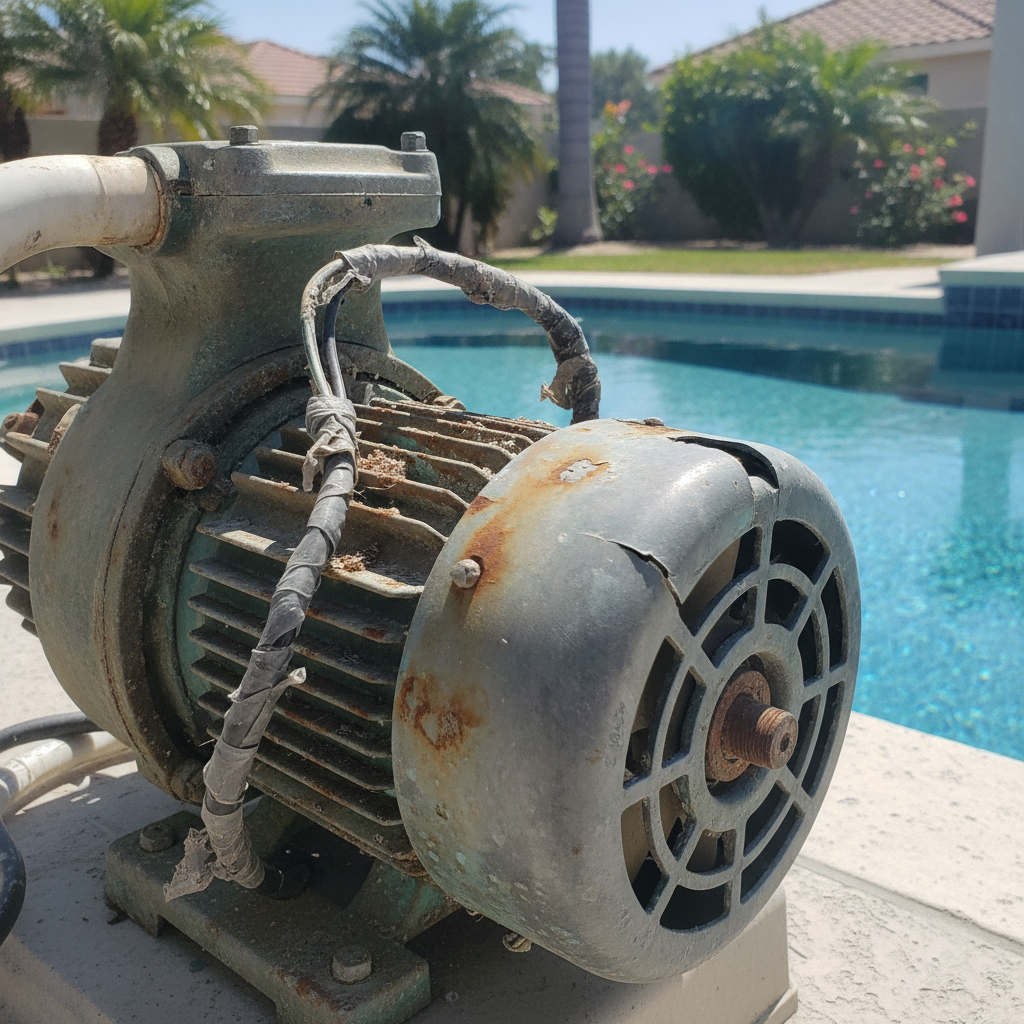
Water and electricity are a risky combination, making leaks around your pool pump motor especially concerning. If you notice puddles, dampness, or rust forming near the pump housing, these are signs that seals or gaskets may be failing. Over time, water intrusion can corrode internal motor components, leading to electrical shorts and eventual breakdown. Corrosion often appears as white or greenish mineral deposits, while rust is a sign of metal deterioration.
Leaky seals can also allow air into the system, causing the pump to lose prime and run dry. Running a pump without water can quickly burn out the motor, compounding the damage. If you spot any signs of leakage, turn off the pump and inspect the area. Sometimes, tightening fittings or replacing a gasket can resolve minor leaks, but persistent moisture or visible corrosion usually requires professional attention.
Regularly inspecting the pump area for leaks and corrosion can help you catch small issues before they become major repairs. Preventive maintenance is key to extending the life of your pool pump motor and keeping your pool safe and enjoyable.
Motor Overheating: Causes and Consequences
Overheating is a common cause of pool pump motor failure, especially during peak swimming season when the system runs for extended periods. If you notice that the motor housing is too hot to touch, or if the pump shuts off unexpectedly, overheating could be the culprit. Common causes include poor ventilation, clogged cooling vents, or excessive load from a blocked impeller or filter. In some cases, an aging or underpowered motor may simply be unable to handle the demands of your pool.
Repeated overheating not only shortens the lifespan of the motor but can also warp internal components and damage electrical windings. This can lead to a cycle of declining performance, increased energy use, and eventual failure. To prevent overheating, ensure the pump area is clear of debris and that vents are unobstructed. If your system is older, consider whether a modern, energy-efficient replacement might be a better long-term investment.
If you suspect overheating is an issue, monitor the motor’s temperature during operation and check for tripped thermal overload switches. Professional technicians can use specialized tools to diagnose and address overheating before it leads to permanent damage.
Burning Smells or Smoke: Immediate Action Required
Few warning signs are as urgent as the smell of burning or visible smoke coming from your pool pump motor. These indicators suggest severe electrical or mechanical failure, such as melting insulation, shorted windings, or seized bearings. If you detect a burning odor or see smoke, immediately turn off the pump at the breaker and do not attempt to restart it until a professional has inspected the system.
Ignoring these signs can result in catastrophic motor failure, fire risk, or damage to surrounding equipment. In many cases, a burning smell is caused by overheating, but it can also be a sign of electrical arcing or internal component breakdown. Prompt action is essential to protect your property and ensure safety for everyone around the pool.
If your pump emits any unusual smells, don’t take chances. Call a qualified pool equipment technician to assess the situation and recommend the best course of action. Early intervention can often prevent a complete motor replacement and keep your pool running safely.
Erratic Startups and Unexpected Shutdowns
A pool pump motor that struggles to start, hesitates, or shuts down unexpectedly is signaling trouble. Erratic startups can be caused by failing capacitors, worn start switches, or internal electrical faults. Sometimes, the motor may hum but fail to turn over, or it may run for a few minutes before shutting off. These symptoms often precede complete motor failure and should not be ignored.
Frequent on-off cycling can also stress other pool equipment, disrupt water chemistry, and increase energy costs. If your pump is unreliable, document when the issues occur and any patterns you notice. This information can help a technician diagnose the root cause more quickly and accurately.
Addressing erratic motor behavior early can prevent more extensive damage to your pool system. In some cases, replacing a capacitor or repairing a switch is all that’s needed. In others, a full motor rebuild or replacement may be necessary. Either way, prompt attention ensures your pool remains a source of enjoyment, not frustration.
Energy Bills on the Rise? Efficiency Loss and What It Means
If you’ve noticed your energy bills creeping up, your pool pump motor could be to blame. As motors age or develop internal issues, they often become less efficient, drawing more power to do the same amount of work. This not only impacts your wallet but also signals that the motor is under strain. Common causes of efficiency loss include worn bearings, misaligned shafts, or electrical degradation within the motor windings.
Tracking your pool’s energy consumption over time can help you spot trends and identify when performance is slipping. If your pump is running longer to achieve the same water clarity, or if it seems to be working harder than usual, it may be time for a tune-up or replacement. Modern variable-speed pumps offer significant energy savings compared to older single-speed models and are worth considering for long-term cost control.
For business owners with commercial pools, efficiency is especially important. Higher operating costs can impact your bottom line and reduce the value of your property. Investing in a well-maintained, energy-efficient pump system is one of the best ways to ensure predictable expenses and reliable pool performance.
Motor Age and Maintenance History: When Replacement Makes Sense
Like any mechanical equipment, pool pump motors have a finite lifespan. Most residential motors last between five and ten years, depending on usage, maintenance, and environmental factors. If your motor is approaching or exceeding this age range, or if it has a history of frequent repairs, replacement may be the most cost-effective option.
Regular maintenance, such as lubricating bearings, cleaning vents, and replacing worn seals, can extend the life of your motor. However, if you’re facing repeated breakdowns or escalating repair costs, it’s wise to compare the price of ongoing fixes with the investment in a new, more efficient unit. Newer motors often run quieter, use less energy, and come with better warranties, providing peace of mind for years to come.
Keep a record of your pump’s maintenance and repair history. This information helps you make informed decisions about when to repair and when to replace, ensuring you get the most value from your pool equipment.
DIY Troubleshooting vs. Professional Pool Pump Repair in Margarita
When faced with pool pump motor issues, many homeowners wonder whether to tackle repairs themselves or call in a professional. Simple tasks, such as cleaning baskets, checking for obstructions, or tightening loose fittings, are often within reach for the average pool owner. However, diagnosing and repairing electrical or internal motor problems requires specialized knowledge and tools.
Attempting complex repairs without proper training can lead to further damage, void warranties, or even create safety hazards. Licensed pool equipment technicians are equipped to safely diagnose issues, source quality replacement parts, and ensure repairs meet local codes and manufacturer specifications. For pool pump repair Rancho Margarita CA residents trust, working with a reputable service provider is the best way to protect your investment.
If you’re unsure about the severity of your pump motor problem, start with basic troubleshooting. If the issue persists, or if you notice electrical, mechanical, or water damage, don’t hesitate to call a professional. The peace of mind and long-term savings are well worth the investment.
| Warning Sign | Possible Cause | Recommended Action |
|---|---|---|
| Loud grinding or squealing noises | Worn bearings or debris in impeller | Shut off pump, inspect, call technician if needed |
| Breaker trips frequently | Electrical short or overload | Stop use, consult a professional |
| Weak water flow | Clogged impeller or failing motor | Clean baskets/filters, call if unresolved |
| Visible leaks or rust | Seal failure or water intrusion | Replace seals, address corrosion promptly |
| Burning smell or smoke | Severe electrical or mechanical failure | Turn off power, call technician immediately |
Preventive Steps to Extend Your Pool Pump Motor’s Life
A proactive approach to pool pump maintenance can help you avoid many common motor failures. Regularly check and clean the pump basket, skimmer, and filter to ensure optimal water flow. Inspect the pump housing for leaks, rust, or mineral buildup, and listen for any changes in operating noise. Keep the motor area free of debris and ensure adequate ventilation to prevent overheating.
Schedule annual inspections with a qualified technician to catch early signs of wear and address minor issues before they escalate. Consider upgrading to energy-efficient, variable-speed pumps if your current system is aging or inefficient. By staying vigilant and addressing problems promptly, you can extend the life of your pool pump motor and enjoy a cleaner, safer pool year-round.
For local homeowners and business owners alike, preventive care is the best investment you can make in your pool’s longevity and reliability.
Key Takeaways
Recognizing the warning signs of a failing pool pump motor can save you from costly repairs and unexpected downtime. Listen for unusual noises, watch for leaks and corrosion, and pay attention to changes in water flow and energy consumption. Address electrical issues promptly and don’t ignore burning smells or erratic behavior. For pool pump repair Rancho Margarita CA residents rely on, professional expertise is invaluable, especially when safety or complex diagnostics are involved. With regular maintenance and timely intervention, you can keep your pool running smoothly and enjoy the peace of mind that comes with a well-cared-for system.